

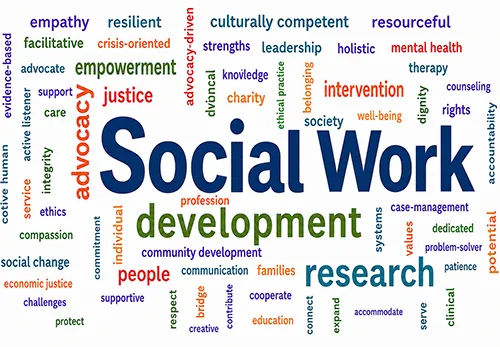
Social work is a job focused on helping people live better lives and meet their basic needs. Social workers pay special attention to people who are vulnerable, struggling, or treated unfairly. They use different skills and methods to help individuals, families, groups, and communities solve problems, handle challenges, and improve their overall well-being.
Social workers show their commitment to public service by:
- Speaking up for people who need support
- Helping people find important resources and services
- Creating and running programs that support communities
- Working to fix unfair systems
- Promoting healthy, strong, and fair communities
If you want to make a real difference in people's lives and help your community, social work is a great way to improve society and support others.
Students should meet with their advisor to choose classes that match the requirements of the university they plan to transfer to. The transfer plan on this page is an example based on a university many Lee College students select, but students may transfer to any university they choose.
Social work is a rewarding career that helps people, families, and communities face challenges and improve their lives. Students studying social work build a strong foundation of knowledge and hands-on skills needed to succeed in this field.
Core Knowledge Areas
Human Behavior and Social Environment
Students learn how biological, mental, and social factors affect people as they grow and develop. This includes understanding families, groups, organizations, and communities. You'll also study how culture, race, gender, sexual orientation, and income level affect a person’s experiences.
Social Work Theory and Practice Methods
Students explore important theories that guide social work, such as systems theory, the ecological perspective, and strengths-based approaches. They also learn practical methods like case management, crisis help, group work, and community organizing.
Social Policy and Services
This area focuses on how social programs and laws are created, run, and affect people. Students learn to understand and advocate for policies that help vulnerable populations and promote fairness and justice.
Research and Evaluation
Students gain skills in research, collecting data, and evaluating programs. This helps social workers use proven methods and contribute new knowledge to the field.
Essential Skills Development
Communication and Interpersonal Skills
Students practice listening carefully, showing empathy, and communicating clearly in writing and speech. They learn how to interview clients, write reports, and work with people from different backgrounds.
Assessment and Problem-Solving
Students learn how to figure out client needs, identify strengths and resources, and plan interventions. They also develop critical thinking through real-life case studies and problem-solving exercises.
Cultural Competence
Students learn to understand and respect different cultures and backgrounds. They reflect on their own biases and practice approaches that honor clients’ dignity and choices.
Ethical Decision-Making
Students study professional rules and learn how to handle ethical challenges in social work. This includes understanding confidentiality, consent, boundaries, and relationships with clients.