
... Through Environmental Research and Local Partnerships
Science Research Opportunities
The Science Division of Lee College offers the following U.S. National Science Foundation (NSF) grant-funded interdisciplinary research opportunities to Lee College students:
1. In The Classroom: CURE courses
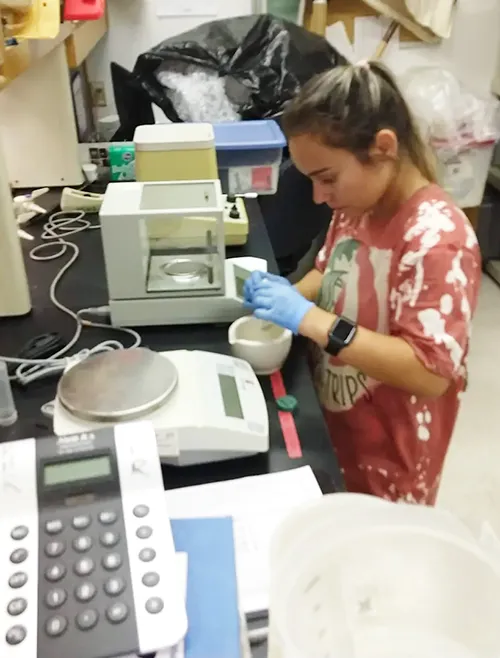 CURE stands for Course-based Undergraduate Research Experiences. Students in a CURE course will learn the same content and lab skills as students in a traditional or non-CURE section. However, CURE students will have additional authentic research experience in the research course. One example of such research experience is to participate in the Living Shorelines project, which is a local coastal management effort. Through environmental, chemical, and biological scientific research, Lee College has partnered with University of Houston Clear Lake and the Galveston Bay Foundation over the years to assess the long-term impact of this management effort.
You can participate in research such as the Living Shoreline project by taking any of the following eight CURE courses* offered at Lee College:
- Environmental Science I (ENVR1401).
Research project focus: Macroplastic Pollutants - Environmental Science II (ENVR1402).
Research project focus: Environmental Toxicology - Introductory Chemistry (CHEM1405).
Research project focus: Chemical Water Pollutants - General Biology II for Non-Science Majors (BIOL1409).
Research project focus: Marsh Management - General Biology I (BIOL1406).
Research project focus: Biotic Water Pollutants - General Biology II (BIOL1407).
Research project focus: Nekton Composition - Organic Chemistry I (CHEM2423).
Research project focus: Microplastics - Microbiology (BIOL2421).
Research project focus: Sediment Microbial Composition
*For course availability and CURE-specific sections, please consult your academic advisor.
*Honors students can learn subject-specific research skills in a CURE course before signing up for a summer Honors research project. See the Summer Research section below or consult the Honors Program Director Brianne Dayley for more information.
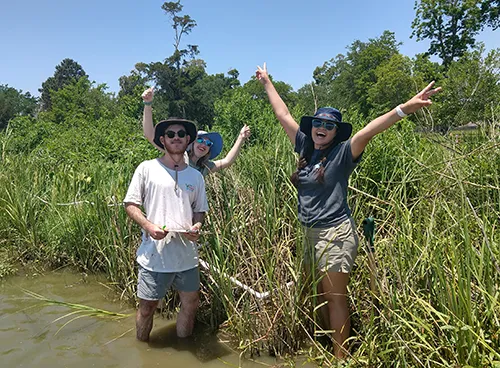 Research opportunities are also available during the summers. There are two options for summer research:
- Paid, Honors-credit research (aimed at science majors)
- Volunteer internships (open to anyone)
2. Paid, Honors-Credit Research
Students can apply to continue their CURE research studies during the summer, under the mentorship of Lee College Faculty. This extension of the class research opportunity can involve field and/or laboratory work, and could lead to Honors Credit for the CURE course previously taken. Stipends are also available to support student researchers over the course of the summer.
Project Examples
- Sediment chemical and microbial composition analysis
- Organic and heavy metal contamination assessment
- Benthic, nekton and plant community characterization
- Aerial drone imagery (GIS) analysis
Past Project Showcase
- Conferences
- Publications
- Presentations
Galveston Bay Estuary Program State of the Bay Symposium
3. Volunteer Internships
For students who choose to contribute to the local scientific community without engaging in independent research, they will be connected to internships available through our community partner, the Galveston Bay Foundation.
These options are a great way to be engaged in meaningful, local projects.
To apply for a research opportunity, please contact one of the project faculty (contact information below).
4. Transfer Paths
The credit hours of all the eight CURE courses taken at Lee College can be transferred to University of Houston - Clear Lake (UHCL). Students in Biology, Chemistry and Environmental Science will find complete transfer plans between our schools here soon.
UHCL is also our research partner, and so many of the summer research projects started at Lee College can be continued at UHCL.
Want More Information?
Contact:
- Jim Dobberstine (jdobberstine@lee.edu); Environmental Science/Biology faculty member
- Yihfen Yen (yyen@lee.edu); Microbiology/Biology faculty member
- Christine Miller (cmiller@lee.edu); Chemistry faculty member
- Regina Barrera (rbarrera@lee.edu); Science Division Chair and Lab Coordinator